

Some companies are defined by their products, and others are defined by their history. Ferrer Wines belongs to the second kind: a family wine group whose roots have been in the Penedès since 1616, more than four centuries of uninterrupted work with wine and the land that produces it. What began on the La Freixeneda estate, in Sant Quintí de Mediona, has grown into a group with its own wineries in Spain and Argentina and wines from some of the finest appellations in France and Italy, without losing along the way the character that has defined it from the very beginning.
This article follows that journey: from the vineyards of the Penedès to the Uco Valley in Mendoza, by way of Rioja Alavesa, Ribera del Duero, Priorat, Rías Baixas and France’s Champagne region.
It all begins in the Penedès, Catalonia’s great wine region, set between the Mediterranean Sea and the Pre-Coastal Range. It was here, on the La Freixeneda estate in Sant Quintí de Mediona, that the Ferrer family began growing vines in 1616, a date that places the group’s origins in the middle of Spain’s Golden Age. Six generations later, Pedro Ferrer Noguer, the group’s chairman, leads a project that has managed to grow without breaking the thread that ties it to that founding moment.
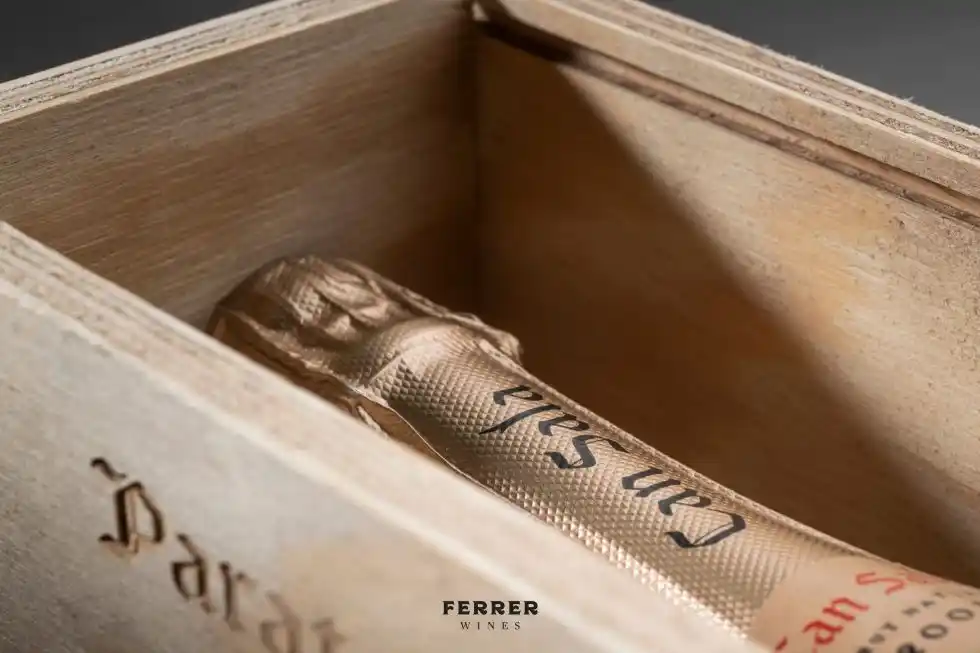
The Penedès is still the heart of the group, with three of its own wineries: La Freixeneda, Can Sala and Cavas Hill. At Can Sala, the family began making cava in 1914, using a historic late-19th-century press that is still used today for the Can Sala Paraje cavas. Cavas Hill, one of the longest-standing names in Catalan sparkling wine, is home to Panot Gaudí, the organic Guarda Superior cava that pays tribute to Barcelona’s modernist symbol. The Penedès is also the home of Conde de Caralt, another historic reference in the world of cava.
The group’s first big step beyond the Penedès was towards Spain’s inland appellations, where wine has a character radically different from the Mediterranean. Rioja, with its Tempranillo and its long export tradition, joined the Ferrer Wines portfolio through Orube, the group’s winery in Rioja Alavesa, and Solar Viejo, a brand that embodies the classic Rioja style: warm wines with notes of vanilla and ripe fruit, aged in American oak and made to accompany a good meal.
Ribera del Duero arrived with Valdubón, a winery at the heart of this Castilian appellation, where Tempranillo, known locally as Tinto Fino, produces some of Spain’s most powerful and long-lived red wines. The cold nights of the Burgos plateau and the dry, intense summers give grapes of great concentration and structure, perfect for long ageing in barrel. Valdubón also makes white wines in the neighbouring D.O. Rueda.
Priorat joined with Morlanda, a commitment to one of the most exclusive and highly regarded appellations in Spanish wine. Black slate soils known as llicorella, very low yields per hectare and varieties such as Garnacha and Cariñena are the ingredients of powerful, mineral wines with an identity that is hard to mistake for any other region.
Galicia came onto the group’s map with Vionta, the Rías Baixas winery specialising in Albariño, the quintessential Atlantic white, which is also present in the D.O. Monterrei. Far from the Mediterranean, in a landscape of estuaries, granite and rain, Vionta makes fresh, saline and highly aromatic wines that offer a perfect counterpoint to the inland reds in the portfolio.
The group’s third big move was to cross borders. Bringing Abelé 1757 into the Ferrer Wines portfolio was a milestone: based in Reims, in the heart of France’s Champagne region, Abelé 1757 is one of the oldest houses in the appellation, founded in precisely that year. Its arrival in the portfolio of the Ferrer family wine group is more than a commercial deal: it is the meeting of two long histories, two ways of understanding traditional-method sparkling wine on either side of the Pyrenees.
Prosecco La Marca, with its wines from Italy’s Veneto made from the Glera grape, completes the group’s trio of sparkling wines and adds a radically different style: lighter, fruitier, designed for aperitifs and easy everyday enjoyment.
For now, the journey ends in Mendoza. Finca Ferrer is the group’s Argentine winery, located in the Uco Valley, one of the highest-altitude wine areas in the world, where Malbec and other red varieties reach unique concentration and personality thanks to the wide gap between day and night temperatures and the purity of the mountain air. It is the furthest point from the Penedès in kilometres, but the closest in philosophy: wine of family, of land and of long tradition.
With seven wineries of its own, iconic brands, wines from four countries and more than four centuries of history, one might think that Ferrer Wines has sacrificed its identity for the sake of growth. The reality is the opposite: each winery and each brand in the portfolio keeps its own character, its own appellation and its own way of understanding wine. There is no single brand covering everything, but rather a family wine group that acts as an umbrella, respecting what makes each territory and each project unique.
This way of growing, adding without homogenising and expanding without losing sight of its origins, is precisely what sets Ferrer Wines apart from other large groups in the sector. The sixth generation of the family still makes decisions from the same land where it all began, with the same conviction that wine is, above all, an expression of the place where it is born and of the people who look after it.
What makes the portfolio of this family wine group worth exploring is not only the range of styles it offers (sparkling wines, Atlantic whites, inland reds, high-altitude wines) but the coherence behind each choice. Every winery that joins the group follows the same logic: adding a territory, a style or a tradition that enriches the whole without repeating what is already there.
The result is a wine journey that runs from the Mediterranean to the Atlantic, from the Pyrenees to the Andes, from the stone vaults of the Penedès to the heights of the Uco Valley, guided by a family wine group that has spent more than four hundred years putting the same care into every bottle it signs.