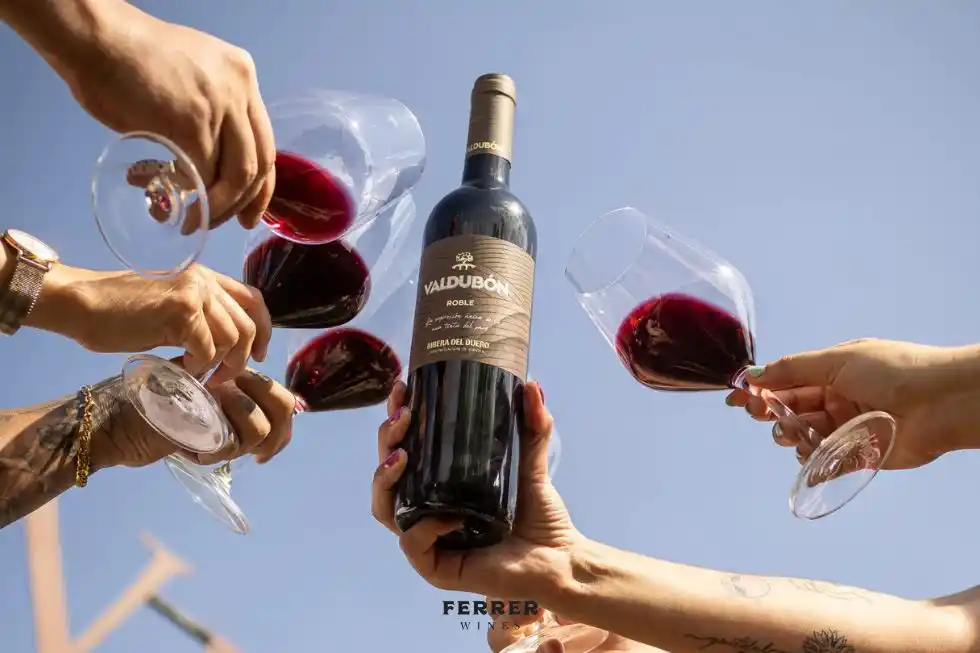


With the arrival of summer and high temperatures, properly storing red wines becomes a challenge to ensure they maintain their qualities. Excessive heat can accelerate the aging of the wine, alter its aromas, and even ruin an excellent bottle. In this technical guide from Ferrer Wines, we explain how to store red wines during hot weather, offering professional advice and verified data to keep your bottles in optimal condition. If you plan to buy red wine directly from the winery, it is essential to follow these recommendations to preserve its quality just as it leaves our cellars.
Summer temperatures can seriously affect red wine. A wine exposed to excessive heat “cooks,” meaning it accelerates oxidation and loses freshness. Oenological studies have shown that sustained temperatures above 25 °C cause deterioration in the wine’s color, aroma, and flavor. In fact, storing wines at over 30 °C for a prolonged time can oxidize them quickly. On the other hand, the ideal storage temperature ranges from 12 °C to 18 °C, within which wine evolves slowly and in a controlled manner. Staying within this range is especially important in hot weather, as each additional degree speeds up internal chemical reactions.
Another critical factor is sudden temperature changes. Repeatedly shifting from a cool environment to intense heat (or vice versa) causes the liquid to expand and contract, putting pressure on the cork and allowing air to enter. These thermal fluctuations can be catastrophic for the wine, ruining its properties. That’s why we emphasize that, beyond the maximum temperature, thermal stability is key: a slightly higher but constant temperature is better than alternating heat and cold spikes.
To ensure the quality of red wine during the summer, we must recreate at home conditions similar to those of a professional winery. Ferrer Wines has many years of experience in optimal wine storage, and we recommend paying attention to five fundamental factors: temperature, humidity, bottle position, light, and stillness (absence of vibrations). Below we detail each aspect according to Ferrer Wines’ storage practices and standards.
Temperature is the most influential factor in preserving red wine. Ideally, store reds in a cool place, around 12–18 °C, without sudden fluctuations. Within this “golden range,” closer to 12–15 °C is best for long-term aging. In fact, Ferrer Wines’ technical sheets suggest ranges in that order: for example, our Solar Viejo Tempranillo (D.O.Ca. Rioja) should be stored between 12 and 15 °C, protected from light and vibrations. These values ensure that the wine evolves slowly without being damaged.
During hot months, achieving these temperatures may require certain aids. What options do we have at home? If you have a wine cooler or climate-controlled cellar, this is the ideal place for your red wines: these devices maintain the programmed temperature consistently. If a wine cooler is not available, the next best place is the coolest area of the home (basements, interior storage rooms, or well-insulated rooms). Even a cabinet in a lower area away from windows can work. A practical tip: take advantage of the fact that heat rises and store bottles on lower shelves of your furniture, never near the ceiling.
In summer, the upper part of a room can be several degrees warmer than the floor, so keeping wines as close to the floor as possible helps keep them cooler. It’s also important to avoid nearby heat sources. Don’t store wines in the kitchen (due to ovens and hot appliances) or next to sunlit walls.
If you don’t have a sufficiently cool place, an emergency solution is to temporarily store reds in a domestic refrigerator, but with caution. Regular fridges are usually at ~4 °C, too cold for long-term storage. Also, the lack of humidity and motor vibrations can harm the wine. If you choose to temporarily chill a bottle to lower its temperature, let it rest outside the fridge for a few minutes before serving, avoiding extreme thermal shocks.
Finally, be careful with air conditioning: while it may be tempting to cool the house with AC, setting the thermostat to 25 °C or cooler and then turning it off causes sudden rises that stress the wine. It’s best to maintain, as much as possible, a stable temperature in the room where you keep the bottles, even if it’s slightly warmer than ideal, avoiding continuous fluctuations.
Relative humidity is another pillar of proper red wine storage, especially in summer. An ambient humidity level around 60–70% is considered ideal for storing wine. Why? Because the cork needs to stay slightly moist to maintain its elasticity and seal. If the environment is too dry (very low humidity), the cork may dehydrate and crack, allowing oxygen to enter and oxidize the wine. Conversely, if humidity is excessive and well over 70%, mold may appear on the cork or capsules, spoiling the presentation and even contaminating the contents.
In very dry climates or homes with constant air conditioning (which tends to dry out the air), it’s advisable to monitor humidity where red wines are stored. A small hygrometer can be placed near the bottles to ensure the environment doesn’t drop below 50% humidity. If it’s too dry, a good idea is to place a container of water nearby or use mild humidifiers to reach the optimal range.
On the other hand, in coastal or very humid areas, ensure there’s no condensation; gentle ventilation of the storage space helps prevent mold without losing too much humidity. Bottle position: directly related to humidity and the cork, we remind you of the golden rule: wines with cork stoppers should be stored horizontally. Keeping the bottle lying down ensures the wine stays in contact with the cork inside, preventing it from drying out too much.
At Ferrer Wines, we strictly follow this rule in our cellars. A moist cork expands and seals the bottle well; a dry cork contracts, allowing air to seep in, which can oxidize the wine quickly. So even at home, use wine racks that keep bottles lying down. (Note: The only bottles that could be stored upright are those with screw caps or other non-porous airtight closures. But most aged red wines use natural cork, so horizontal positioning is essential.)
Besides heat and humidity, there are other environmental factors that Ferrer Wines recommends controlling to preserve your red wines in summer. Light, especially direct sunlight or ultraviolet light, is very harmful to wine. UV radiation triggers unwanted chemical reactions that alter color and flavor; constant sun exposure can turn wine rancid quickly. That’s why our bottles are usually made of dark glass, to filter light, but even so, you should never leave wine in the sun or near windows.
The ideal is to store them in the dark or semi-darkness. If you don’t have a completely dark place, keep bottles in boxes, cabinets, or covered with dark cloths to block intense light. In hot weather, be especially cautious with summer sun, which shines for many hours a day: a bottle left near a sunny window can spoil in days or even hot hours. Vibrations and constant movement also affect wine. A red wine in aging needs “peace.”
At Ferrer Wines, we know that wine is a living product that evolves best at rest. Shaking can disturb the wine’s natural sediments and accelerate certain reactions. Therefore, avoid placing your wines on or near appliances with motors (refrigerators, washing machines, air conditioning units) that transmit vibrations. Likewise, do not shake or reposition bottles unnecessarily; any movement should be gentle. One tip is to place a cushioning material (like wooden shelves, cork, or rubber) in the storage area to absorb small environmental vibrations. Keeping bottles still and calm throughout the summer will ensure that red wine reaches the glass in its ideal state.
Summarizing the key points, here are Ferrer Wines’ recommended practices to protect your red wines during warm months:
By following these tips, your red wines will get through the summer in excellent condition. Remember that proper storage is essential for wine to reveal all its aroma and flavor potential when served. A poorly stored wine, on the other hand, can be disappointing even if it was originally high quality. At Ferrer Wines, we are passionate about ensuring that every bottle reaches your table just as the winemaker intended, which is why we emphasize educating our clients on the best at-home storage practices.
With over 150 years of winemaking heritage, Ferrer Wines understands the importance of conservation at every stage of the wine’s journey, from vineyard to glass. In our cellars and warehouses, we apply strict temperature and humidity controls so that each red wine retains its original characteristics. Our passion for quality is reflected in every detail: we use high-quality bottles, selected corks, and storage systems that prevent unwanted vibrations.
Thanks to this, when our wines reach the consumer, they do so in optimal condition.
When you buy red wine from the winery through Ferrer Wines, you have the peace of mind of acquiring wines cared for with professional standards. We offer a wide variety of reds from various designations of origin (Rioja, Ribera del Duero, Penedés, among others), all stored and transported with precautions to protect them from heat and any factor that could reduce their quality. In addition, our team of experts is always ready to advise you on the storage and serving of each wine.
Maintaining cellar-quality at home is possible if you follow the provided recommendations; this way, every bottle you purchase will preserve its unique identity and flavor, enhancing your wine experience. In short, hot weather doesn’t have to be the enemy of your favorite red wines. With careful management of temperature, humidity, and environment, you can continue enjoying them to the fullest, just as you would at the winery.
At Ferrer Wines, we want you to feel the excitement of a great wine in any season, which is why we invite you to put these tips into practice and trust in our selection of red wines, where tradition and innovation come together to offer you the best of the world’s winemaking.