

Talking about Panot Gaudí without talking about where it comes from is telling only half the story. This is what makes the terroir of Moja leave its mark on every bubble in the collection.
Moja and Olèrdola: the heart of Alt Penedès wine country
For generations, Alt Penedès has been one of Catalonia’s leading areas for cava production, and Moja is one of its most distinctive locations. This is where the 20- to 40-year-old organic vineyards from which Panot Gaudí is made are located, cultivated for long enough for the vines to develop deep roots and the natural balance that only comes with age.
This area was not chosen by chance: it is the same land that has supported the work of Cavas Hill since its foundation in 1887, making it one of the oldest wineries in the D.O. Cava.
Calcareous soils and the Garraf sea breeze: the combination that slows ripening
Two climatic factors define the profile of these grapes. The first is the calcareous soil, typical of the Penedès region, which provides minerality and helps regulate water availability for the vines. The second is the sea breeze that reaches the vineyards from the Garraf, a cooling effect that moderates temperatures even during the warmest months.
Together, these two elements slow down grape ripening, allowing sugar and acidity to develop in greater balance. It is precisely this slow, gradual ripening that later translates into the freshness and elegance characteristic of the cavas in the collection.
Organic viticulture: less intervention, more expression of the land
All Panot Gaudí wines come from organically certified vineyards. This means avoiding herbicides and synthetic plant protection products, and opting for vineyard management that respects the natural cycles of the soil and the vine.
Organic viticulture is not only an environmental decision: it is also a way of allowing the terroir to express itself with less interference, something particularly relevant to a project that wants every glass to tell the story of the place it comes from.
Hand harvesting: why the exact moment of picking matters
The Xarel·lo, Macabeo and Parellada varieties —along with Chardonnay and Pinot Noir in some wines in the collection— are harvested by hand at the optimum stage of ripeness for each plot. Hand harvesting makes it possible to select the grapes at precisely the right moment and transport them to the winery without the damage that mechanical harvesting can cause.
It is a slower and more expensive process than mechanical harvesting, but it is also the method that best preserves the quality of the grapes from the vineyard to the winery.
From vineyard to ageing: how the terroir reaches the glass
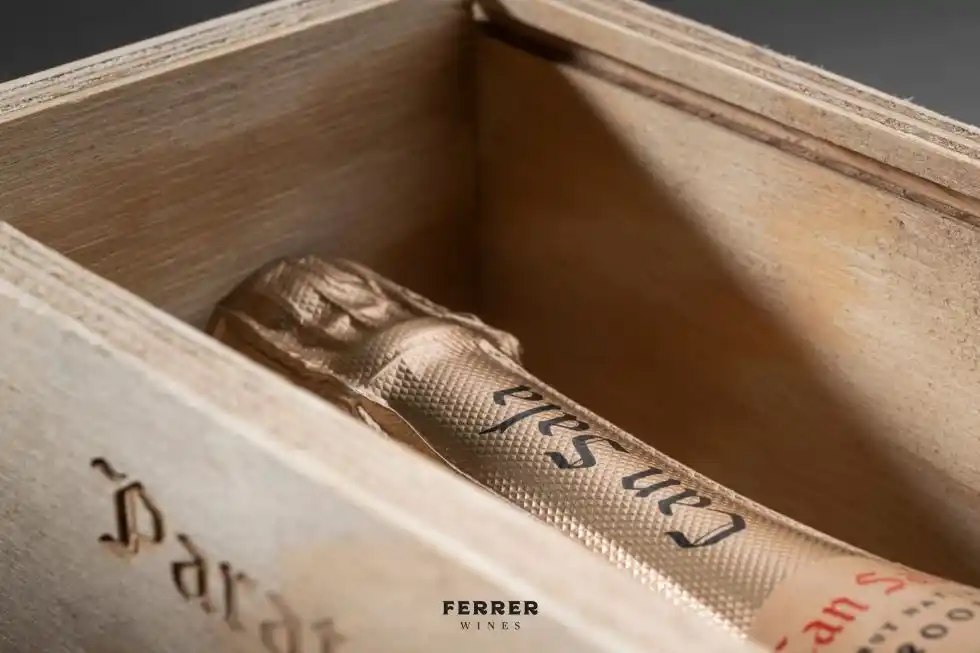
After the base wine has fermented in stainless steel tanks, each cava in the Panot Gaudí collection follows the traditional method, with a second fermentation in the bottle in the underground cellars of Cavas Hill. The ageing period varies depending on the wine —from the 9 months of Coral to the 30 months of Gran Reserva— and it is precisely this combination of its starting point in Moja and the time spent resting in the cellar that gives each cava its own personality within the same collection.
The longer the cava remains in contact with its lees, the more it develops notes of ripe fruit, toasted bread and dried fruit, always built on the fresh, mineral foundation provided by the vineyard where it originated.
Every glass of Panot Gaudí begins long before the bottle is opened, in the organic vineyards of Moja. Discover the different wines in the collection and find the one that best suits your moment.